
Background
scəẁaθən məsteyəxʷ
Land Use Plan
Brief History
The Tsawwassen People have lived on the lands surrounding the Salish Sea and Lower Fraser River since time immemorial. The deep connection to the lands and waters shaped a thriving society rooted in fishing, hunting, and trade. Salmon, sturgeon, crab, and eulachon were central to their sustenance and cultural practices, while longhouse systems governed social order, wealth redistribution, and ceremonial life. The Tsawwassen Territory extends across what is now the Lower Mainland and Gulf Islands, and the oral traditions, ancestral names, and place-based knowledge continue to affirm TFN’s enduring presence and stewardship of these lands.

Legend of the First Tsawwassen Settler
The large pole resting along the carving shed beside the Long House on Tsawwassen Lands, depicts the journey of the first Coast Salish settler, Tsaatzen, to the English Bluff area. The story of his journey is told by the animals of the pole, the black bear, the eagle and the beaver. The eagle was his spirit giving him guidance and protection but it was more than a spirit, it was inextricably bound to Tsaatzen. The eagle flew above him warning of any danger that may lie ahead and if the danger has passed. The bear and beaver provided Tsaatzen with food, clothing and coverings. Of all the figures, the eagle was the most important, it was Tsaatzen’s friend, spirit, and power.
Legend of Princess Tsawwassa
Princess Tsawwassa is Chief Stetson’s daughter, a wise and strong young woman who rises as chief outstanding her brothers in a sacred leadership challenge. Her journey honours the strength of our women, our connection to lands and sea, and the power of our traditional teachings.
The house post located at the entrance of the TFN Sports Field commemorates Princess Tsawwassa. In the leadership challenge, her brothers returned with meat from deer, bear, panther, smaller animals, birds, fresh salmon, and berries. Princess Tsawwassa, however brought back all that and much more – including wild onions that made the stew extraordinarily fragrant and delicious – demonstrating her wisdom, resourcefulness and leadership.
Colonial Expansion
Colonial expansion brought significant disruption, as TFN, like many Indigenous peoples, faced dispossession, marginalization, and the imposition of the Indian Act. In the face of systemic discrimination, land dispossession, and the erasure of rights under colonial rule, the Tsawwassen community upheld their cultural identity and fought persistently for self-determination.
This culminated in the 2009 by the Tsawwassen First Nation Final Agreement, the first urban modern treaty in British Columbia, which recognized TFN’s rights to self-governance and jurisdiction over their lands. Since then, TFN has embarked on a path of revitalization— developing infrastructure, education, and economic development projects. This included the signing of a historic 99-year lease for the development of Tsawwassen Mills, one of Canada’s largest shopping centres, and the completion of a $27 million sewage treatment plant that laid the foundation for future growth. This is just the start and reflects resurgence for TFN, incorporating TFN’s traditional values with modern governance to build TFN as a self-sufficient and thriving First Nation.
Current Land Use Context
Since the adoption of the 2009 Land Use Plan, TFN has made significant land development progress in advancing the goals and objectives set out in the plan. The following highlights the key accomplishments:
- Established planning and development regulatory framework.
- Roads and infrastructure: the total length of public roads has increased from 5.5 km at Treaty to 25 km by 2025, the planned full build-out length is 35 km. Major municipal infrastructure including water, sanitary sewer and drainage services, and third party services have been provided along with the road development.
- Members housing: between 2009 and 2025, the number of Member units on Tsawwassen Lands more than doubled, rising from 70 to 145 units.
- Community facilities: key community facilities completed include the Sewage Treatment Plant, the Sports Field, the Youth Centre and the Elders Centre. The pilot program
- Community Farm is steadily growing. Design work is underway for a new Legislature and Administration Building.
- Leasehold development: TFN has secured long-term leases for commercial development, Tsawwassen Mills and Tsawwassen Commons, as well as for industrial development on lands north of Salish Sea Way. The number of units in the leasehold residential area increased significantly, from approximately 200 in 2009 to 2000 units in 2025.
- Increased land base: TFN’s land base includes Tsawwassen Lands and Other Tsawwassen Lands. In 2019, TFN acquired 80 hectares of lands in Brunswick Point. In 2024, 70 hectares of these lands were incorporated into TFN’s jurisdiction as Tsawwassen Lands.

Population and Employment
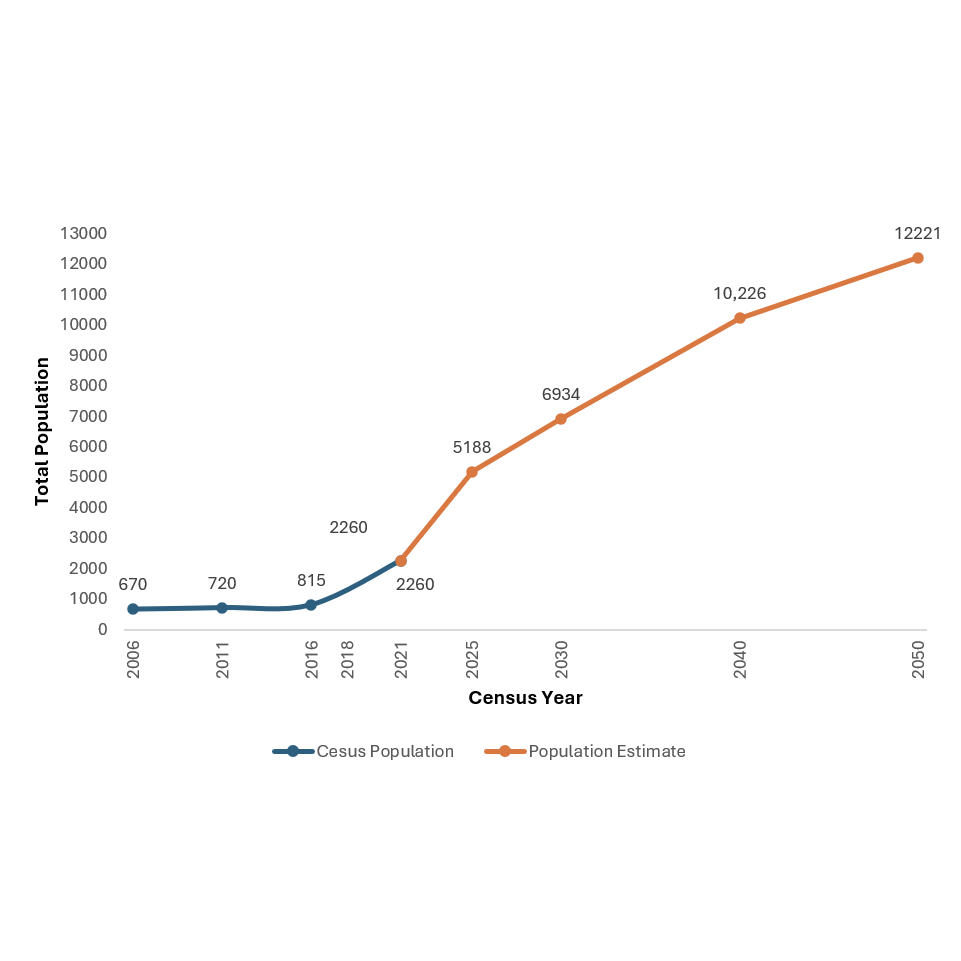
Tsawwassen Lands have experienced substantial population growth since Treaty. In 2009 there were approximately 660 people living on Tsawwassen Lands. In September 2025, there were approximately 5,400, including 4,900 leasehold residents and 500 member-housing (Village) residents. The projected population at full build-out (assuming by 2040) is approximately 10,000, and by 2050 is approximately 12,000.
Community Engagement
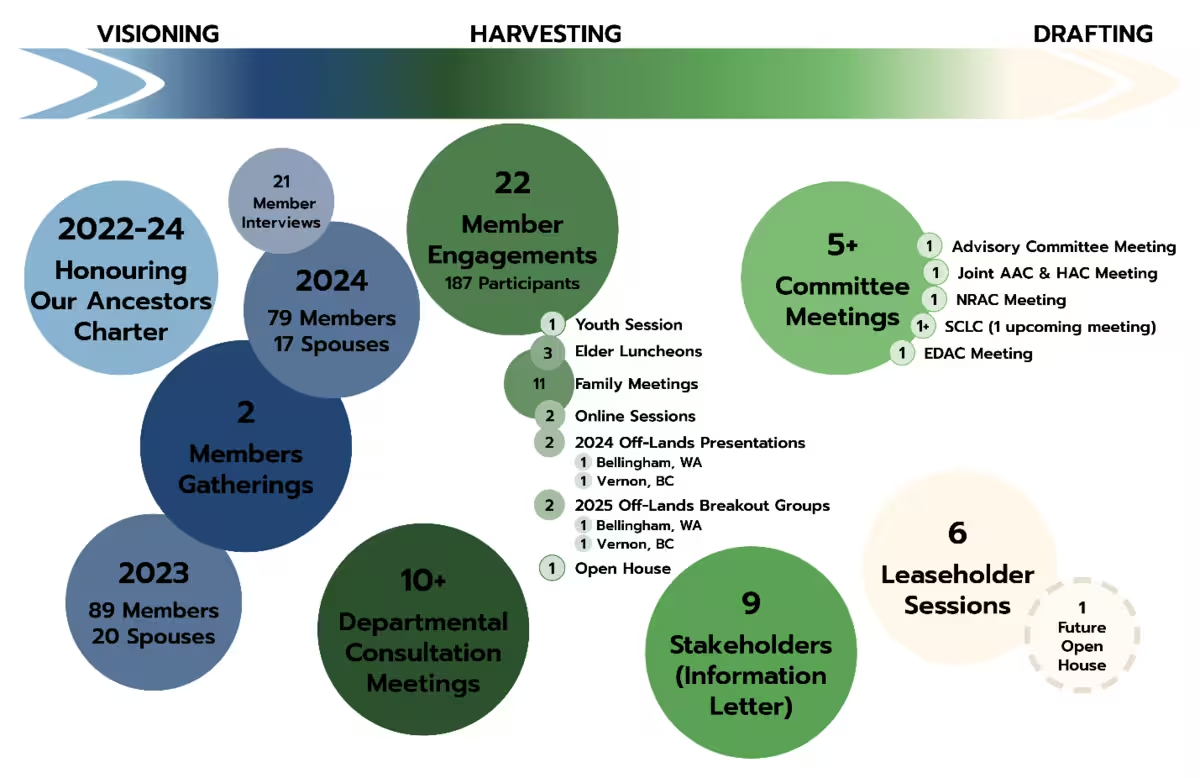
The Land Use Plan Update engagement process included engagement sessions with Tsawwassen Members, Executive Council, Committees, Departments, Leasehold Residents and External Stakeholders. From September 2023 to June 2025, 24 sessions were conducted with TFN Members which generated over 350 Member participations.
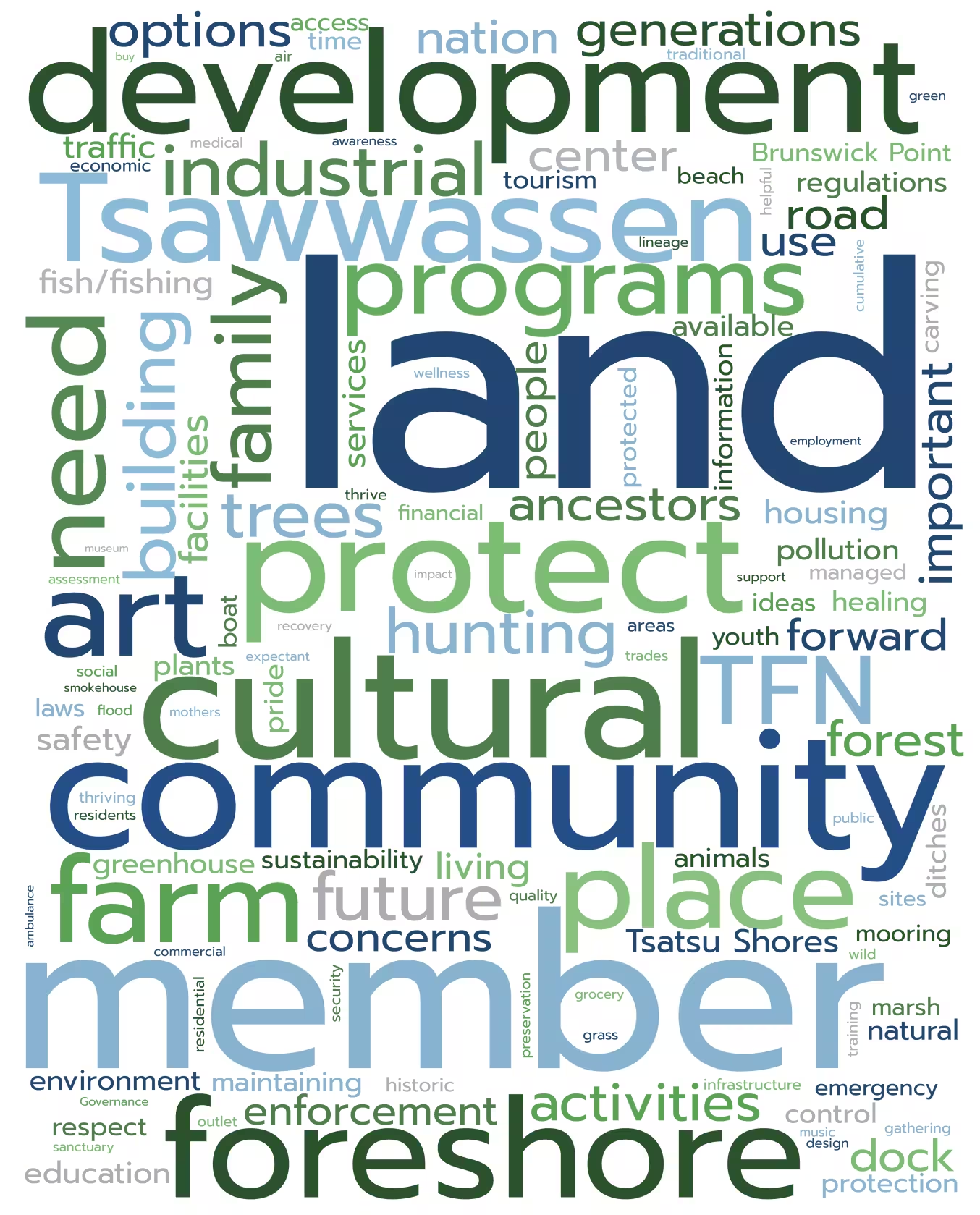
A word cloud was created based on the engagement input. It highlights some of the most common themes and topics. Key themes raised by Members include syə́θəs (culture), šxʷkʷecxənəm (care) and məsteyəxʷ (community).
Following the documentation of TFN’s land development progress and a high-level review of the Land Use Plan policy items, and building on the input from community engagement, the Land Use Plan Update was prepared with the following key considerations:
- Maintain existing land use designations
- Identify key areas of action and opportunities
- Strengthen scəẁaθən cultural roots
- Enhance environmental stewardship
- Foster a thriving TFN community for both Members and leasehold residents
Working Together within Regional Context
Tsawwassen First Nation is an active member of the Metro Vancouver Regional District and TransLink, receiving water supply form Metro Vancouver and public transit services from TransLink. TFN’s geographic setting has been significantly shaped by regional infrastructure developments, including the BC Ferries causeway and the Roberts Bank Port causeway. TFN shares geographic boundaries with the City of Delta and Musqueam First Nation.
The Land Use Plan Update remains consistent with the Metro 2050 Regional Growth Strategy and echoes its five goals: create a compact urban area; support a sustainable economy; protect the environment, address climate change, and respond to natural hazards; provide diverse and affordable housing choices; and support sustainable transportation choices. TFN’s planning for land relationships with balanced growth supports the Metro 2050 Vision. It contributes to regional development by providing affordable housing choices and employment opportunities, as well as open space and trail connections to the regional system. TFN also continues to collaborate with TransLink to enhance transit services within and connecting Tsawwassen Lands and to be an integral part of the regional transit network.
On the journey of planning for land relationships and land use on our Tsawwassen Lands, TFN remains a vital and connected part of the regional context through ongoing coordination with neighbouring municipalities, regional agencies, and other First Nations, to align land use decisions, transportation planning, servicing strategies, and environmental initiatives.
