Introduction
scəẁaθən məsteyəxʷ
Land Use Plan
Executive Summary
Over the past 16 years, Tsawwassen First Nation has made significant progress following the 2009 Land Use Plan vision and policies. The 2025 Land Use Plan Update responds to the post-Treaty growth and evolving community needs and provides a renewed vision and continued guidance for land use over the next 25 years.

Foundational Principles
The 2025 Land Use Plan is guided by the following principles to steer the Tsawwassen community into the future:
nəc̓aʔmát: Work together as one
tatəl̕wí:ls: Iterative decision-making
səniw: Rely on member advice, traditional knowledge and best practice
Vision & Guiding Planning Principles
The Plan envisions a thriving, culturally vibrant, environmentally sustainable, and inclusive community. Its Vision introduces three core values:
syə́θəs (Culture): Tsawwassen people take pride in, and our residents respect Tsawwassen culture, traditions and stories. Coast Salish art and hən̓q̓əmin̓əm language are widely used on TFN Lands.
šxʷkʷecxənəm (Care): The environment, views, and idyllic location of TFN lands are protected. The foreshore and the bluff are appropriately managed, new forest areas are created, and TFN is prepared for climate change.
məsteyəxʷ (Community): The community is established, safe and well-serviced for a growing population of Members and leasehold residents. Land development is balanced with environmental protection and Members’ needs, while reflecting Tsawwassen cultural roots. The community offers more housing choices for Members and TFN has an expanded land base.
In implementing these core values, the Plan outlines the following Guiding Planning Principles:
- Maintain community identity and character
- Establish a strong Village Centre and a Cultural Centre to support diverse and inviting recreation & cultural opportunities
- Embrace environmental sustainability
- Provide a range of housing opportunities
- Enable a variety of transportation options
- Upgrade road and service infrastructure in the Village to modern standards
- Enable a wide range of economic opportunities for TFN and individual Members
- Acquire additional lands to connect to scəẁaθən cultural roots and advance economic development opportunities
- Strategic investment in specialized expertise to mitigate risks and enable the adoption of best practices
Prayer
ʔi łeʔ t̕iw̓iʔəł
ʔa cicəł siʔem̓
xʷiy̓ənem̓ ʔa tə sʔanł st̕iw̓iʔəł
c̓i:θamə ʔəw̓ ʔi m̓istalxʷ sq̓əq̓ip
x̌ix̌lemətalxʷ tənaʔ weyal
t̕θixʷəm čxʷ ʔi c̓ewət̕alxʷ ʔə təθ sya:ys ct
k̓ʷəmk̓ʷəmstəxʷ tə šxʷqʷələwən ct
Let us pray Creator,
Listen to our prayer
Thank you for bringing us together
Watch over us today
Please help us with our work
Keep our thoughts strong


Chief’s Letter
əy̓ sweyəl,
Sixteen years ago, Tsawwassen First Nation made history by adopting our first Land Use Plan. That plan was a powerful expression of our vision for the future—a future rooted in our identity, guided by our values, and shaped by our inherent right to self-government affirmed by the Tsawwassen Treaty.
Today, we continue that journey. After two years of community engagement, dialogue, and collaboration, I am excited to share the Land Use Plan Update – ʔi ct scəẁaθən təməxʷ Our Tsawwassen Lands. This updated plan reflects the voices of our Members, the wisdom of our Elders, and the hopes of our Youth. The Land Use Plan is now grounded in the principles of Culture, Care, and Community, and guided by the spirit of nəc̓aʔmat – working together as one.
At the 2025 Members Gathering, our community overwhelmingly voted in support of the Land Use Plan Update. This strong show of support and energy I witnessed from the community confirms that our Nation is not only exercising self-government in theory – we are living it in practice. We are making decisions about our lands, our future, and our way of life, together.
The 2009 Land Use Plan focused on unlocking economic opportunities, now we are prepared to carry it forward more holistically in 2025, rooted in Tsawwassen culture. The update to our Land Use Plan aligns with the guiding principles of our xʷəliw̓ ənstəxʷ k̓ʷθə syə́w̓én̓əł ct (Honouring Our Ancestors) Charter, especially the foundational pillar of Language, Culture, and Healing. By planning how we use and protect our lands, we are creating space for cultural revitalization, community wellness, and the healing of our People. We are honouring our ancestors by continuing the work they began, and we are preparing a strong foundation for our generations to come.
Whether you live on or off Tsawwassen Lands, this is your Nation, your home, and your future. I am very proud of what we have accomplished together, and Executive Council and I look forward to continuing the next stage of our journey with all of you.
hay čxʷ q̓ə O’siem!
Laura Cassidy
Chief
Tsawwassen First Nation
Acknowledgements
This Land Use Plan update is the result of a collective effort by the TFN, the Community, and partners. Executive Council was instrumental in providing leadership and vision throughout this process.
We are deeply grateful to Tsawwassen Members for their active involvement and thoughtful participation to the development of this plan. Your contributions through TFN Family Meetings, Off-Land and Online Member Engagement, Youth Engagement, Elder Lunch Engagement, Member Open House, and various TFN committees have shaped this plan and ensured it reflects the values, priorities, and aspirations of our Nation.
A special thank you to Advisory Council, Housing Advisory Committee, Agricultural Advisory Committee, Natural Resources Advisory Committee, Standing Committee of Language and Culture, and Economic Development Advisory Committee for their guidance and expertise. Your input was vital in balancing cultural, environmental, and economic considerations.
We acknowledge the work of TFN staff across all departments who supported this process through coordination, facilitation, and technical expertise. Your dedication has helped bring this plan to life.
We also recognize the contributions of our leaseholders – residential, commercial, and industrial – whose input complimented a shared vision for the sustainable development of Tsawwassen Lands.
Finally, we thank our regional stakeholders for their collaboration and continued partnership to support TFN’s goals of community development, land stewardship, and a thriving Tsawwassen culture.
Together, we created a Land Use Plan in the spirit of nəc̓aʔmat that truly reflects Tsawwassen’s vision and values in present and future.
Purpose and Role of the Plan
The 2009 Land Use Plan was a foundational document created before the Tsawwassen First Nation Final Agreement (“Treaty”) Effective Date. It focused on setting out the plan for implementing Tsawwassen First Nation (TFN)’s Treaty rights in preparation of unlocking TFN’s economic development.
Over the past 16 years, TFN has made significant progress, including the establishment of a legal framework for land use planning and development, the delivery of housing for Members, construction of roads and infrastructure, development of community facilities, community farm, leasehold residential, commercial and industrial projects, and expansion of the land base from 724 hectares to 804 hectares.
The 2025 Land Use Plan Update responds to this growth and evolving community needs. Its purpose is to provide a renewed vision and continued guidance for land use over the next 25 years.
Role of the Land Use Plan
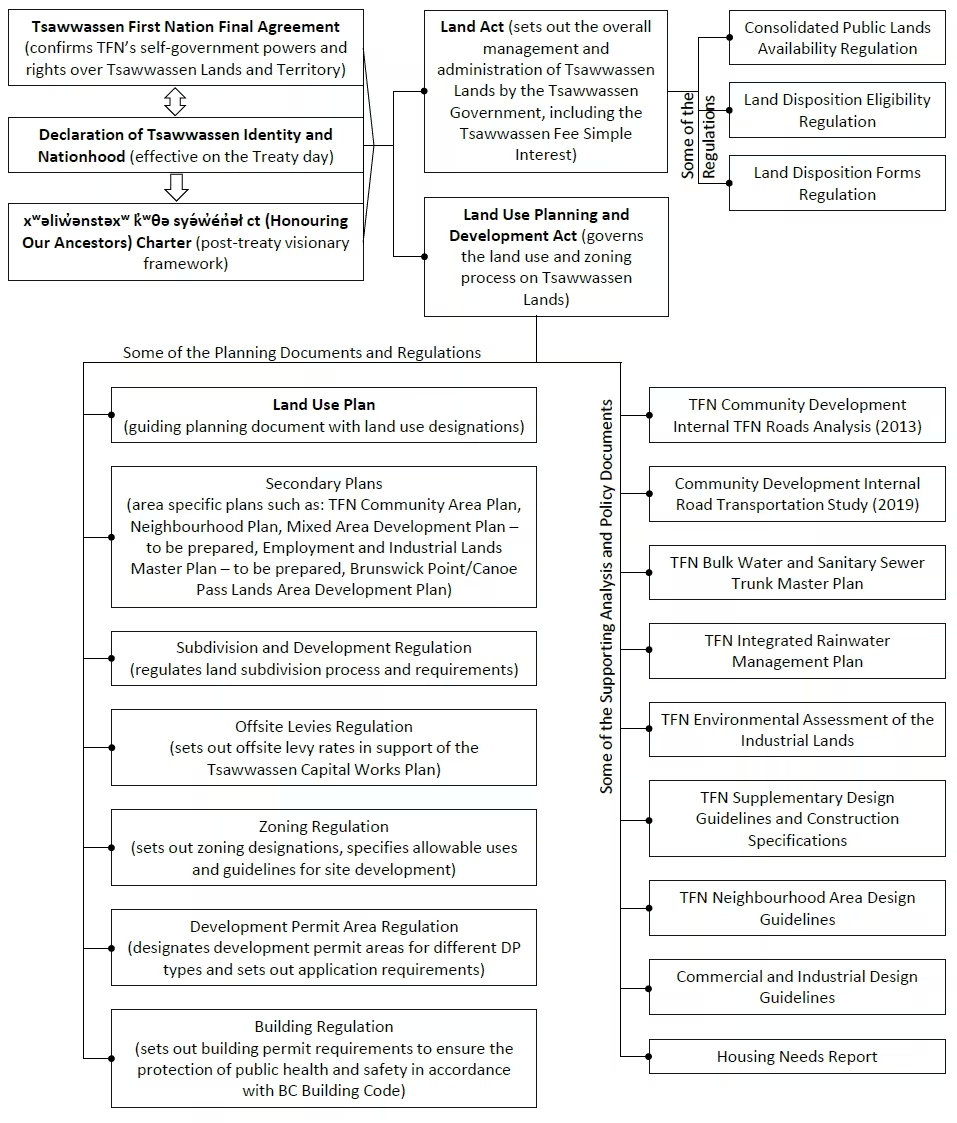
Under TFN’s legal framework, the Land Use Plan is governed by the Land Use Planning and Development Act. It guides Tsawwassen’s land use and development through land use designations. Figure 1 illustrates TFN’s land use planning and development structure.
Foundational Principles
The 2025 Land Use Plan is guided by the following principles to steer the Tsawwassen community into the future:
nəc̓aʔmát: Work together as one
tatəl̕wí:ls: Iterative decision-making
səniw: Rely on member advice, traditional knowledge and best practices

Our Approach
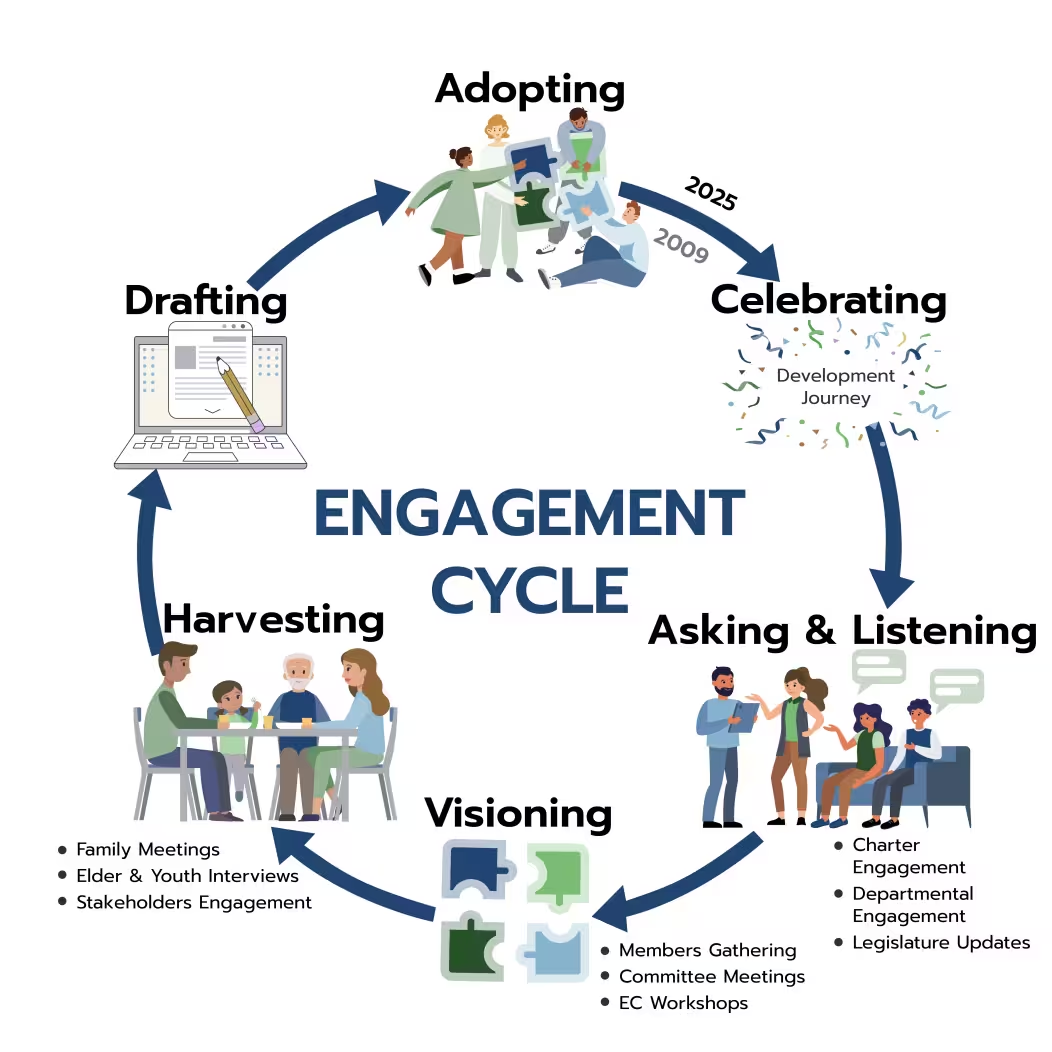
The 2025 Land Use Plan Update followed the Engagement Cycle and included the following steps:
- Review the 2009 Land Use Plan and current land use context
- Hear what Members need
- Plan for land relationships